- Nov 20
- By YeHZ
Most winter camping guides verify the wrong thing. They check whether a campground is open, recommend it, and you arrive to find the only sites left are walk-in tent pads where the rules say in plain language that sleeping in your vehicle is not allowed.
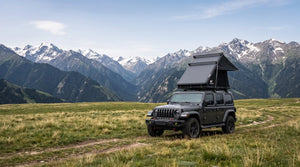
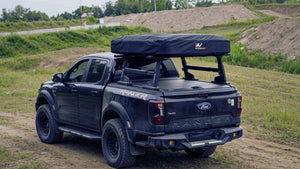
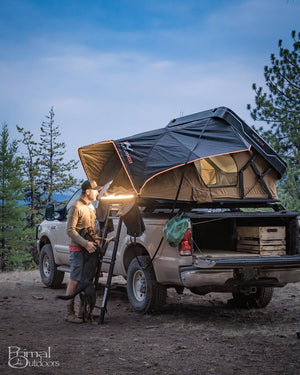
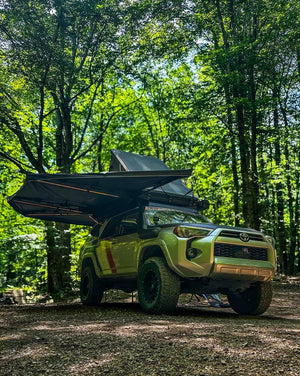
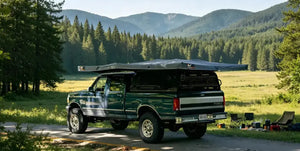
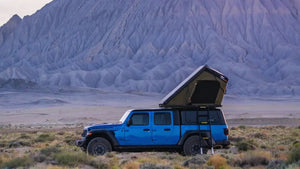
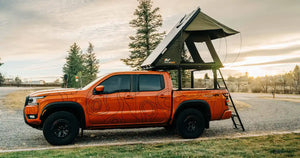
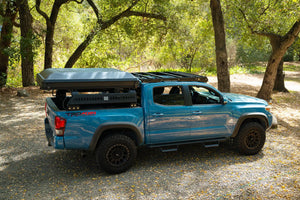
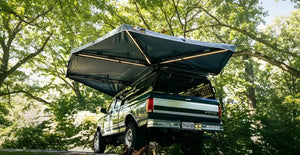
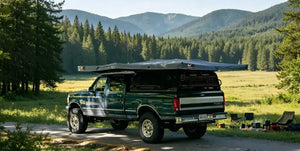
A rooftop tent is a vehicle that becomes a tent. That moves the question down one level: not "is this campground open", but "does this site treat a parked, roof-deployed vehicle as legal camping". Every destination below can be cited, not inferred — each has a rule, a site type, or a land designation that settles it. The popular ones that fail are listed at the end.
In this guide
The Four-Part Screen
1. Can you park at the site?
Drive-in only. Walk-in and hike-in sites exist in almost every national park campground, and they are where vehicle campers get turned away. Furnace Creek states it outright: guests in walk-in sites 115–150 "may not sleep in their vehicles".
2. Does the site accept vehicle equipment?
Recreation.gov publishes permitted equipment per site. "Tent, Car" is not "Tent, RV, Trailer, Pickup Camper, Vehicle". Book the latter.
3. Is a tent pad mandatory?
Where a pad exists, rules often require the tent to stand on it. A roof tent cannot move to a pad — it stays on the vehicle in the driveway. This single line disqualifies more campgrounds than any other.
4. Is vehicle sleeping permitted, or is the land open to dispersed camping?
Two ways to pass: a park that explicitly allows sleeping in a registered site (Joshua Tree, Yosemite), or public land where camping is by designation rather than by site type (Alberta PLUZ, BLM).
Destinations That Pass the Screen
| Destination | Region | What settles it | Best months |
|---|---|---|---|
| Joshua Tree — Jumbo Rocks / Belle | California | NPS: vehicle sleeping allowed at a designated site | Oct – Apr |
| Upper Pines, Yosemite | California | NPS: vehicle sleeping allowed in a registered site | Dec – Mar |
| Furnace Creek, Death Valley | California | Standard/RV site; walk-in tent loop bans vehicle sleeping | Nov – Mar |
| Watchman, Zion | Utah | A/B electric sites take tent or RV; F loop bars 19 ft+ | Nov – Mar |
| Tunnel Mountain Village II, Banff | Alberta | Year-round for tents and RVs; vehicle on gravel pad | Dec – Mar |
| Abraham Lake, Nordegg | Alberta | PLUZ random camping; pass required | Jan – Feb |
| Alabama Hills, BLM | California | Designated BLM sites; free permit; no site typing | Nov – Mar |
Worth Planning Around
Joshua Tree: the only one that says it in writing
Joshua Tree publishes the sentence every rooftop tent owner needs: you may sleep in your vehicle at a lawfully occupied, designated campsite, and it is illegal anywhere else — trailheads, dirt roads, pullouts. Jumbo Rocks takes reservations from the same day up to six months ahead; Belle is first-come, year-round, and fits rigs to about 35 feet. Winter is high season here, so book rather than gamble.
Furnace Creek: legal if you book the right loop
Furnace Creek is the only reservable campground in Death Valley, open year-round with every site reservable from October 15 to April 15, up to six months ahead. The trap is site type: walk-in tent-only sites 100–110 and 115–150 accept no campervans, pop-ups or RVs, and their guests may not sleep in their vehicles. Book a standard or RV site and the same campground is straightforward — and at 190 feet below sea level it is the warmest base here.
Alabama Hills: dispersed, but with a paper trail
Alabama Hills is the US counterpart to Abraham Lake: BLM land where camping is limited by designated sites and a free permit, not by site type. Camping is first-come, some zones are day-use only, and the stay limit is 14 days in any 28-day period. Below the Sierra crest, winter nights are cold and windy, but the road stays open and you are 15 minutes from Lone Pine.
What We Left Out, and Why
Lake Louise: the wrong side of the fence
Parks Canada describes the soft-sided section as fenced and admitting "tents, soft-sided trailers and camping equipment with soft-sided pop-outs". A roof tent is a soft-sided unit, and that section runs summer only; the hard-sided campground next door admits hard-sided units. Winter does not change which side you belong on.
Mammoth and Moraine Park: built around tent pads
Both run the winter on pad-based sites — Mammoth's tent sites are 9×9 pads permitting "Tent, Car"; Moraine Park's rule is that multiple tents are fine "as long as all tents fit on the pad". A vehicle-mounted tent cannot. Mammoth also caps vehicles at 30 feet in winter and is first-come, which is how you end up at dusk holding the one site you cannot use.
Bryce, Cades Cove, Rio Grande Village
Bryce's winter loops are RV-only; Cades Cove keeps tent-only sites and enforces the pad rule; Rio Grande Village's group campground bans rooftop tents by name, which tells you the standard sites are not automatically open to them either. All three are good campgrounds, none is a settled answer.
Matching the Tent to the Trip
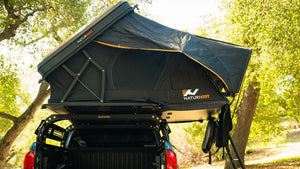
Cold, exposed, snow-load country: aluminum clamshell
Banff in January and Abraham Lake in February are wind-and-snow trips. An aluminum shell is stiff, sheds snow, and holds shape in gusts; it runs cold on clear nights, so pair it with a liner and ventilation. Polaris 3 — aluminum clamshell, two to three people, under a minute to open — is the winter-biased pick.
Two adults plus wet gear: ABS fold-out
Desert nights are cold and dry; coastal and forest nights are wet. A fold-out adds interior volume for drying layers. Sirius 1 Plus covers two to three in that layout.
Long drives, low garages: PHC composite
Joshua Tree and Alabama Hills trips are mostly highway and dirt road. A low-profile PHC shell cuts frontal area and clears a garage door. Polaris Aero is the two-person option.
Accessories for a winter basecamp
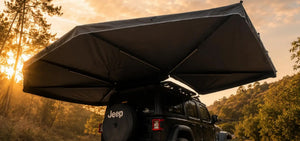
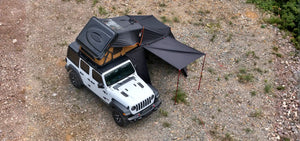
A tent solves sleeping; an awning solves the other fourteen waking hours. The 270 Plus Awning wraps most of the vehicle against sideways weather, the 90 Straight Pull Awning is the quick small-coverage option, and the Shower Room doubles as a wind-blocked changing space.
FAQ
Is a rooftop tent treated as vehicle camping?
Yes, in essentially every jurisdiction — which is why site type matters more than the campground.
Which of these is easiest for a first winter trip?
Joshua Tree and Furnace Creek: reservations, low elevation, mild nights, explicit rules. Save Banff and Abraham Lake for a second season.
Do I need chains?
In mountain parks, frequently — Yosemite requires them when conditions warrant.
What to Do Next
Pick a destination, then the site type, then the date — in that order. Browse the rooftop tent collection and compare the Polaris series. For condensation, snow load and R-value, read the companion piece on winter tent physics.
Sources
National Park Service
- Campgrounds — Joshua Tree
- Camping — Yosemite
- Campgrounds — Yosemite
- Camping in Death Valley
- Furnace Creek — Recreation.gov
- Watchman — Recreation.gov
- Campgrounds — Bryce Canyon
- Cades Cove — Recreation.gov
- Rio Grande Village — Big Bend
- Campgrounds — Rocky Mountain
- Mammoth — Recreation.gov