- May 24
- By wongmonica
How to Clean, Dry, Store & Prevent Mold in Your Rooftop Tent for Long-Term Use

When the Trip Ends, Rooftop Tent Care Begins
Camping doesn’t end when you return home — it ends when your gear is properly maintained.
Proper rooftop tent care and maintenance is essential to keep your tent clean, dry, and ready for your next adventure.
Rain, sand, UV exposure, and humidity all impact your tent over time. Without proper care, even high-quality outdoor gear can develop mold, odor, and fabric damage.
This guide explains how to clean a rooftop tent, how to dry it properly, and how to store it safely for long-term use.
Understanding Rooftop Tent Materials & Waterproof Fabric Care
Most modern rooftop tents are made from:
- Waterproof polyester or Oxford fabric
- UV-resistant coated materials
- Reinforced stitching for outdoor durability
While these materials are designed for harsh environments, proper waterproof tent care is still required to maintain performance.
Without regular maintenance, waterproof coatings can degrade over time.
After Rain Camping: How to Dry a Rooftop Tent Properly
One of the most important parts of rooftop tent maintenance is ensuring it is completely dry before storage.
Never store a wet rooftop tent
Storing a damp tent is the leading cause of:
- Rooftop tent mold
- Fabric odor
- Waterproof coating damage
Even if the surface feels dry, moisture often remains inside seams and folded layers.
How to dry a rooftop tent after rain
To properly dry your tent:
- Fully open the rooftop tent in a ventilated area
- Wipe all interior and exterior surfaces
- Allow airflow for at least 30–60 minutes
- If possible, air dry in indirect sunlight
This step is critical for preventing mold in rooftop tents.
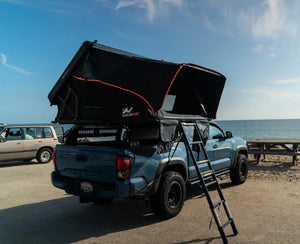
Beach Camping: Sand & Salt Air Rooftop Tent Cleaning Guide
Beach environments require extra rooftop tent cleaning care.
How to remove sand from a rooftop tent
Before closing your tent:
- Use a soft brush or cloth
- Clean zippers, hinges, and folding areas
- Avoid forcing sand into mechanical parts
Sand buildup can affect long-term tent performance.
Salt air protection for rooftop tents
Salt exposure can gradually impact:
- Fabric coatings
- Metal components
- Waterproof performance
Wipe your tent with a damp cloth after beach camping trips.
Hot Weather & UV Protection for Rooftop Tents
Sun exposure is one of the most overlooked factors in rooftop tent maintenance.
How UV affects rooftop tents
Long-term UV exposure can lead to:
- Fabric fading
- Reduced waterproofing
- Material stiffness
How to protect rooftop tent fabric from sun damage
- Avoid prolonged direct sunlight storage
- Park in shaded areas when possible
- Use a rooftop tent cover during storage
How to Clean a Rooftop Tent (Step-by-Step Guide)
Regular rooftop tent cleaning helps extend lifespan and maintain waterproof performance.
Basic rooftop tent cleaning method
- Use lukewarm water
- Soft sponge or microfiber cloth
- Gently wipe fabric surfaces
Avoid:
- High-pressure washing
- Harsh scrubbing
How to remove mold from a rooftop tent
For light rooftop tent mold removal:
Cleaning solution:
- White vinegar + water (1:3 ratio)
Or:
- Mild soap + warm water
Steps:
- Apply gently with cloth
- Wipe affected areas
- Allow full air drying
Important rooftop tent cleaning warning
Do NOT use:
- Bleach
- Strong chemical cleaners
- High heat drying
These can permanently damage waterproof coatings.
Rooftop Tent Storage Guide: Prevent Mold & Damage
Proper rooftop tent storage is the most important factor for long-term durability.
Always ensure your rooftop tent is fully dry
Before closing your tent:
- Check all fabric layers
- Inspect corners and seams
- Ensure no trapped moisture
Even small damp areas can cause mold growth.
Best rooftop tent storage conditions
- Dry environment
- Good ventilation
- Avoid direct sunlight
- Use moisture absorbers if needed
How to Remove Rooftop Tent Mold (Advanced Cases)
Light mold removal
- Vinegar solution (1:3 ratio)
- Gentle wiping
- Air dry completely
Moderate mold
- Repeat cleaning process
- Use outdoor fabric cleaner if needed
- Ensure longer drying time
Severe mold
If mold spreads deeply into fabric:
- Professional cleaning is recommended
- Avoid aggressive scrubbing
Rooftop Tent Protection Cover (Recommended)
For long-term rooftop tent protection and maintenance, using a cover is highly recommended.
Naturnest Rooftop Tent Cover
Benefits:
- Protects rooftop tent from scratches and dust
- Reduces UV exposure damage
- Helps prevent long-term fabric aging
- Improves storage durability
Roof Rack Bar Load Warning (Important Maintenance Note)
For rooftop tents equipped with roof rack bars:
Applicable models:
- Polaris Series
- Sirius 1 Plus
- Sirius 1 Plus XL
Maximum load limit: 20kg
Exceeding this limit may:
- Reduce gas strut lifespan
- Damage structural support
- Affect opening stability
General Rooftop Tent Maintenance Tips
To extend rooftop tent lifespan:
- Regularly inspect stitching and seams
- Clean zippers and moving parts
- Avoid storing wet or compressed
- Check waterproof coating condition periodically
Final Thoughts: Proper Rooftop Tent Care Extends Every Adventure
Proper rooftop tent care and maintenance ensures your gear stays reliable for years.
A clean, dry, and well-maintained rooftop tent means:
- Better camping experiences
- Longer product lifespan
- Stronger waterproof performance
- Fewer maintenance issues
Take care of your tent — and it will take care of every journey ahead.