- Jun 25
- By xiaoxiaoWu

There’s a real difference between sleeping in a rooftop tent and actually getting good sleep in one.
A rooftop tent experience isn’t just about being off the ground or staying protected from the weather—it’s about whether you can actually rest deeply after a long day of travel. At first glance, most rooftop setups promise the same basics: off-ground comfort, weather protection, and a better outdoor experience. But after a few nights in changing temperatures, tight interior space, and morning condensation, the real question becomes:
Will I actually rest well here?
That’s where comfort starts to matter more than specs.
Rooftop Camping Is Becoming More “Livable”
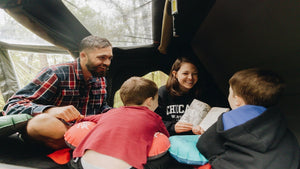
Modern rooftop tents are evolving from simple sleeping shells into compact living spaces designed for real downtime.
That shift means:
• Less condensation during cold or coastal nights
• More usable room to sit, stretch, and move
• Smarter layouts that reduce clutter
• Faster, simpler setup after long drives
It’s no longer just about where you sleep—it’s about how quickly you can feel settled when you arrive.
Comfort Is More Than a Mattress
A good night's sleep isn't just about a thicker mattress—it's about the whole sleep system. Polaris 2’s three-layer design provides better support, insulation, and moisture control than a standard foam mattress.
The 1.97-inch (50 mm) high-density foam mattress offers lasting support without losing its shape. A 0.19-inch (5 mm) anti-condensation mat helps block moisture and cold from below, while the 0.19-inch (5 mm) ocean blanket adds a softer feel and helps keep the sleeping surface dry.
Together, the three layers provide better pressure relief, improved insulation, and enhanced breathability, keeping you warm on cold nights, cool in warmer weather, and comfortable trip after trip.

Condensation: The Hidden Problem
Condensation is one of the most overlooked challenges in rooftop camping.
It doesn’t seem serious at first—until you wake up to damp walls or slightly wet bedding after a cold night.
Better designs reduce this by:
• Separating inner and outer fabric layers
• Improving airflow inside the shell
• Using breathable materials to reduce moisture buildup overnight
When this is handled well, the entire sleeping experience feels more stable, dry, and comfortable.

Setup Shouldn’t Feel Like Work
A rooftop tent is often set up after hours of driving, sometimes in wind, darkness, or exhaustion.
When setup is easy:
• You recover faster after travel
• Camping feels more relaxing
• You actually enjoy arrival instead of dreading it
When it isn’t, it becomes an extension of fatigue rather than relief.
The difference is whether the tent supports your trip—or slows it down.
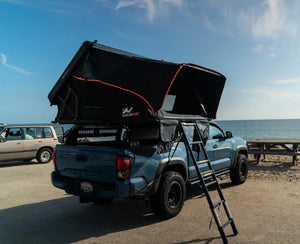
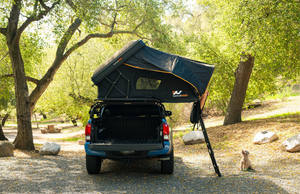
A More Comfortable Approach: Polaris 2 as an Example
Polaris 2 reflects this direction.
It uses a dual-layer fabric structure to help reduce condensation buildup, which helps keep the interior drier and more comfortable through cold or humid nights.
Its extended internal layout increases usable space, making it easier to move, stretch, and store gear without feeling crowded.
It focuses on keeping things simple, with all-weather protection and easy setup.
Overall, the design prioritizes a dry, open, and practical interior.

FAQ: Rooftop Tent Comfort
Can the Polaris 2 connect an air conditioning hose?
Yes, Polaris 2 has reserved ports for air conditioning and heating hoses.
How thick is Polaris 2's mattress?
The full three-layer mattress set totals 1.97 inches (5cm) thick, with dual-width design for flexible sleeping space.
Is a rooftop tent more comfortable than a ground tent?
Yes—a rooftop tent is often more comfortable than a ground tent because it provides a flatter sleeping surface, better insulation from the cold ground, and improved protection from moisture and uneven terrain.
Is 50 too cold to sleep in a roof top tent?
No—50°F (10°C) is comfortable for rooftop tents with proper bedding and insulation.
What Is the Most Comfortable Rooftop Tent?
The Polaris 2 is built for comfort in every season. Its double-layer fabric reduces condensation to keep the interior warm and dry, while the extended design provides more living and sleeping space. Combined with all-weather protection, it delivers a more comfortable camping experience wherever your adventure takes you. Dry air, stable temperature, and enough usable space.
Final Thought
Real rooftop tent comfort isn’t defined by one feature—it’s the combination of a few key factors working together.
Four Things That Affect Rooftop Tent Comfort:
- Mattress quality
- Condensation control
- Temperature and insulation
When these elements are balanced, you get better sleep, more space to relax, and a drier, more stable environment—no matter the weather.